Hackathon: Tackling Circular Economy Challenges with Creativity at VESK, January 16, 2025
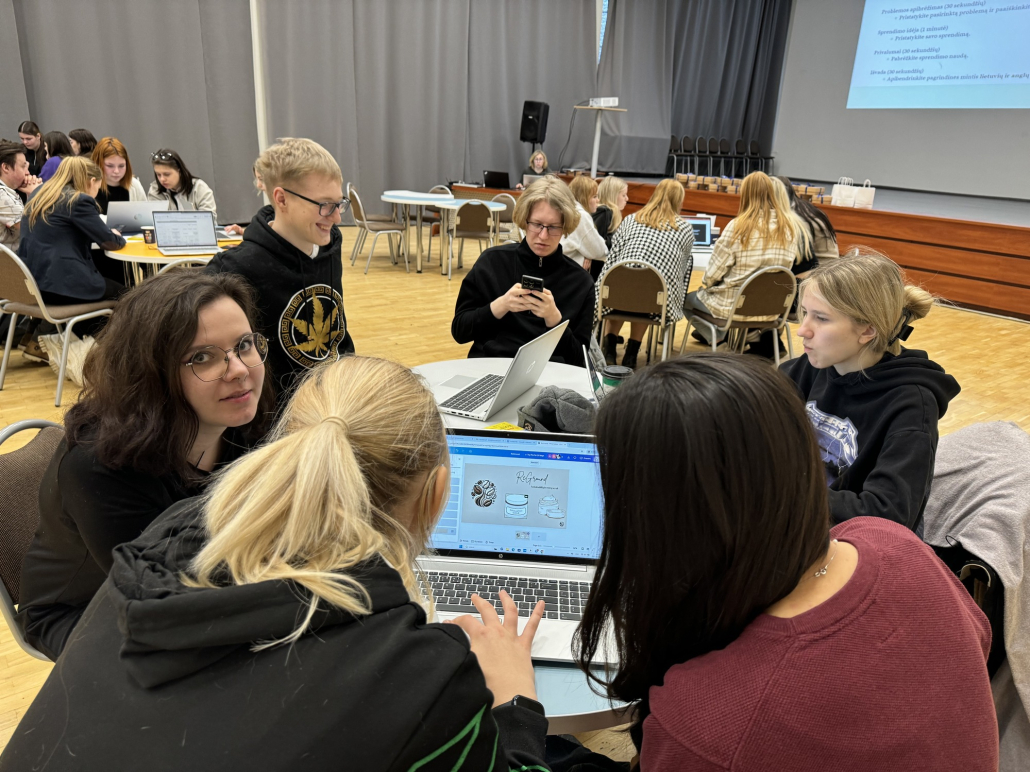
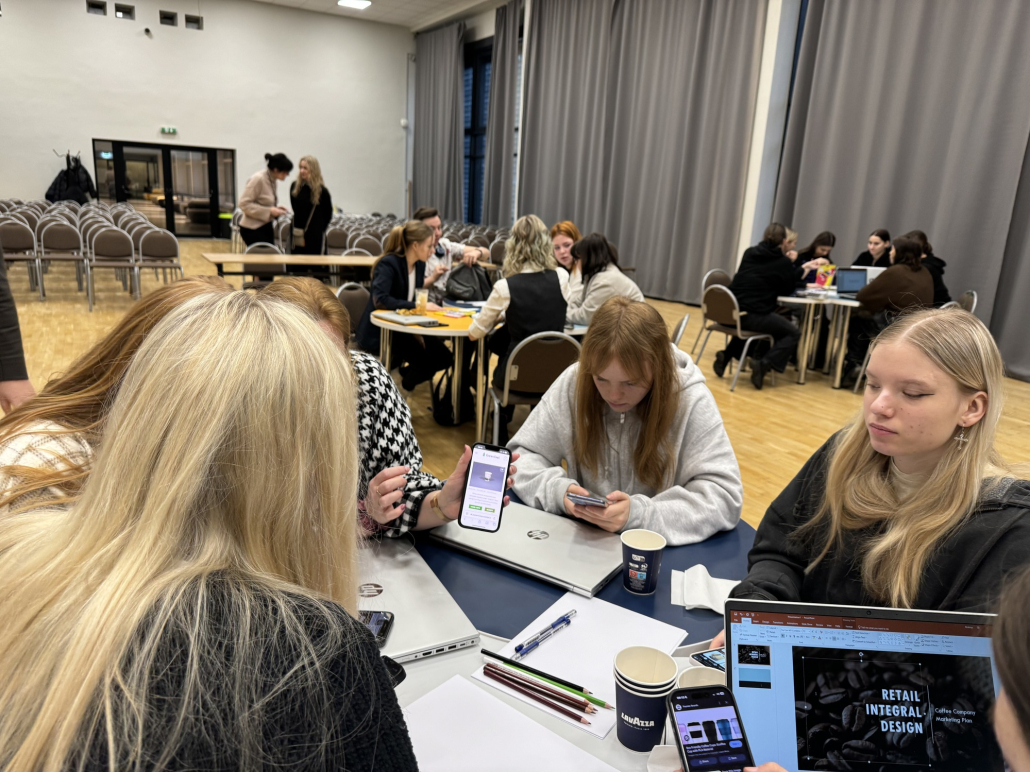
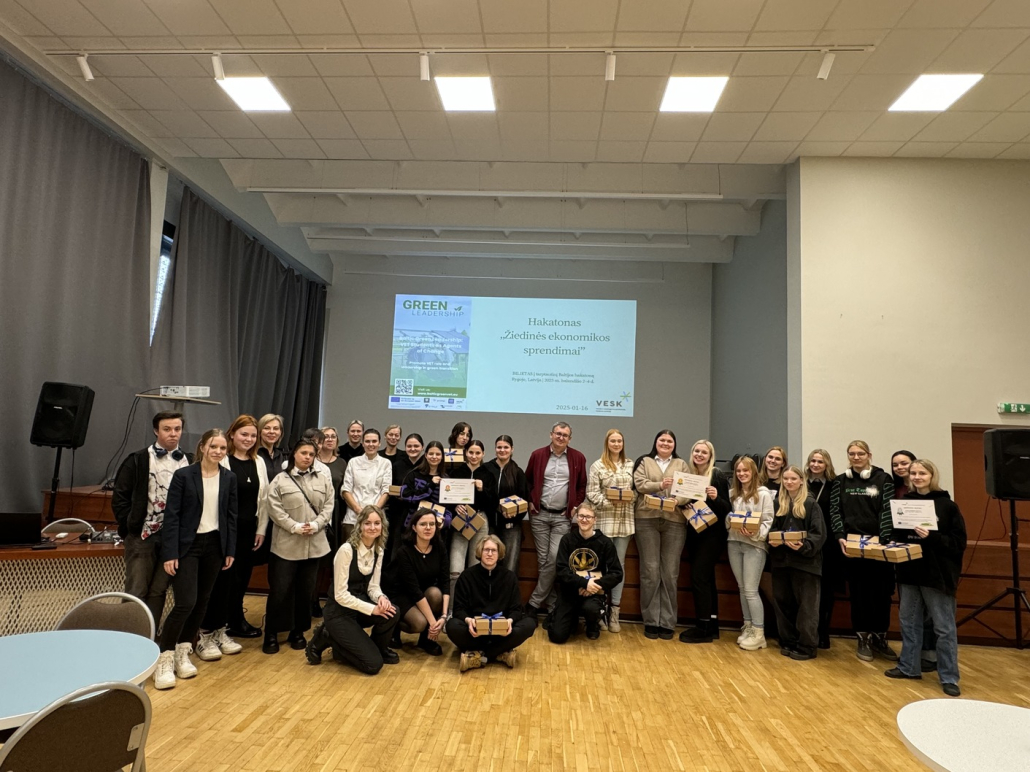
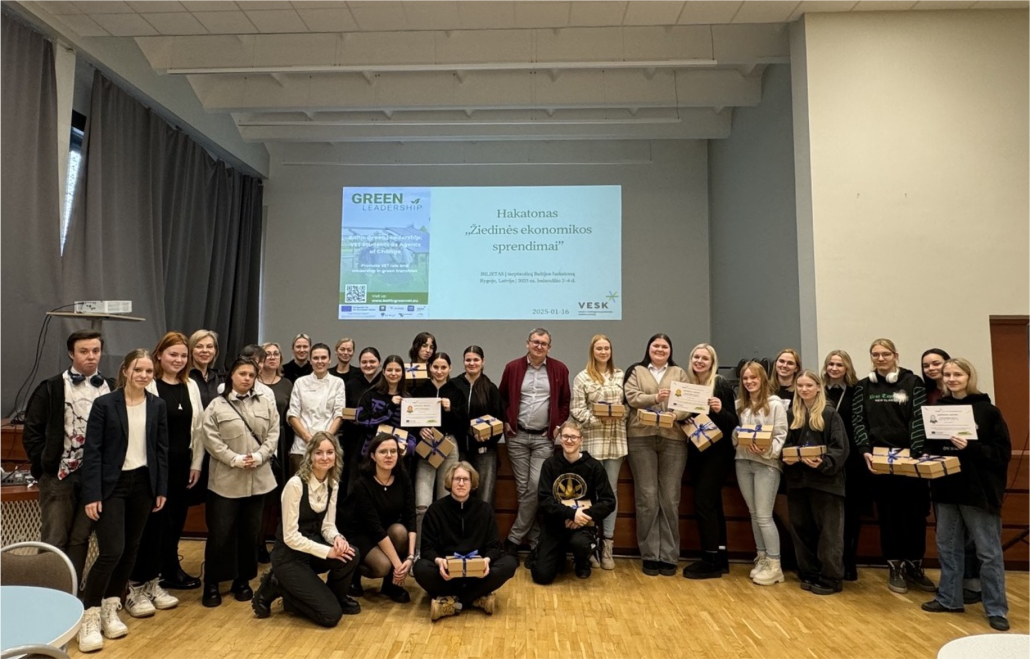
On 16 January, the Business and Hospitality Training Centre (VESK) hosted the national edition of the Green Leadership Hackathon, bringing together students, mentors and business professionals to solve real challenges related to the circular economy.
The challenges for this event came directly from Lithuanian businesses:
- “Mano Guru”, a social enterprise known for its sustainability-driven practices.
- “HBH Vilnius”, a prominent restaurant group committed to reducing its environmental footprint.
The students were tasked with solving two critical problems:
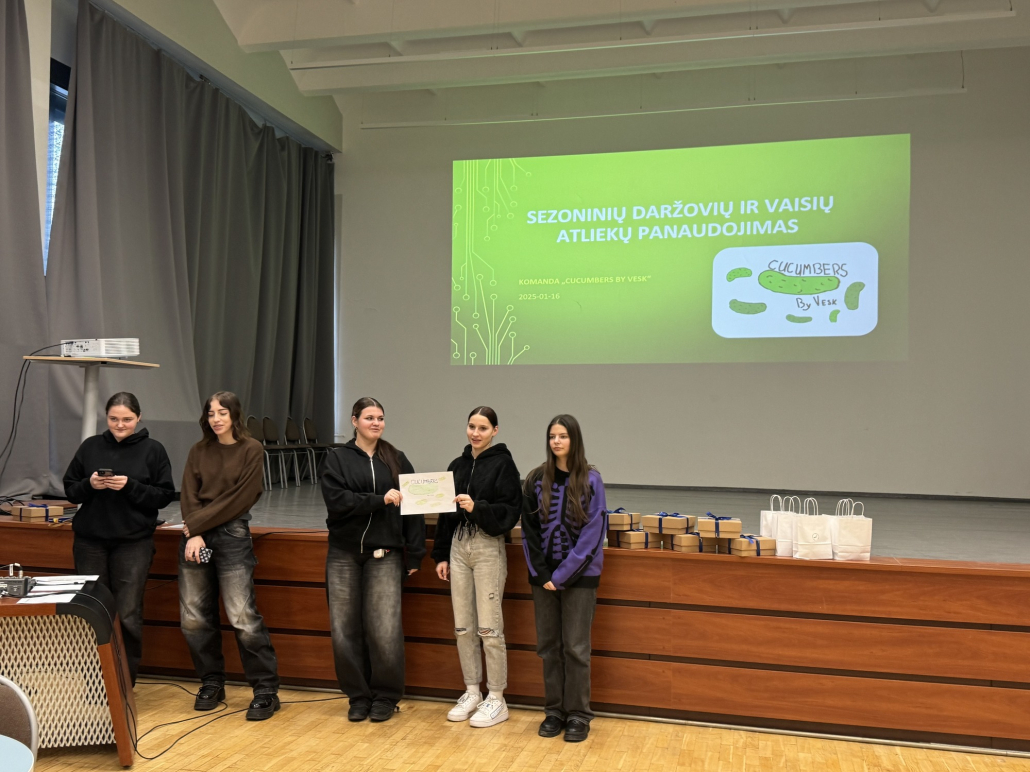
- Reduce food waste: Developing innovative solutions for repurposing seasonal fruit and vegetable waste.
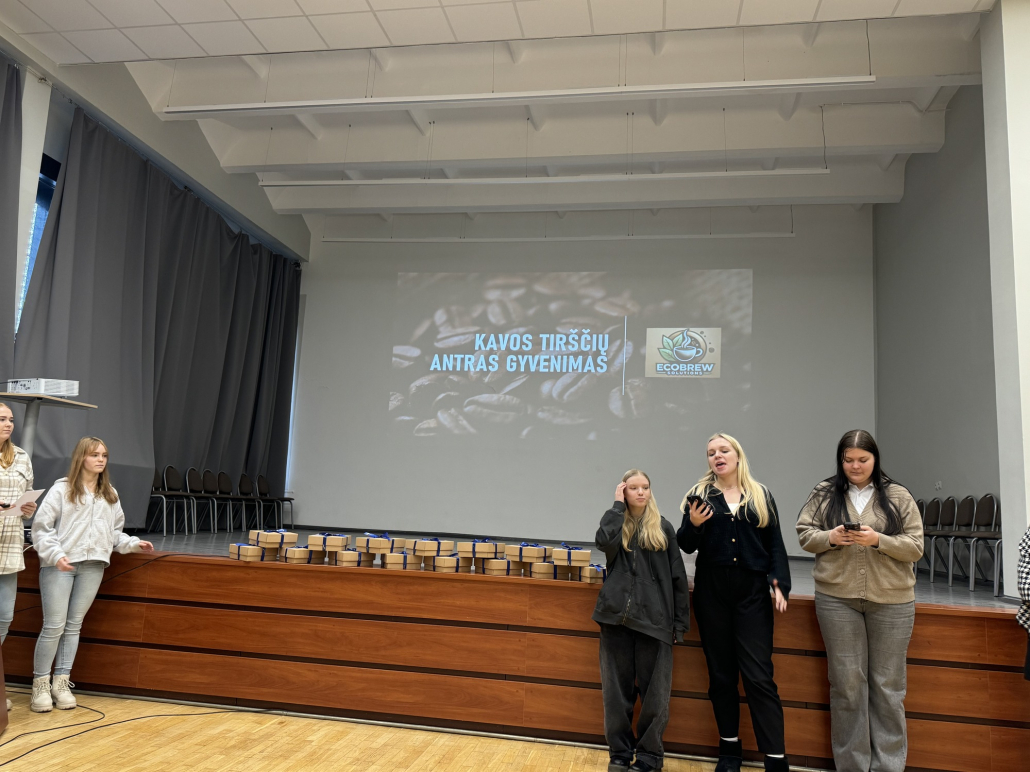
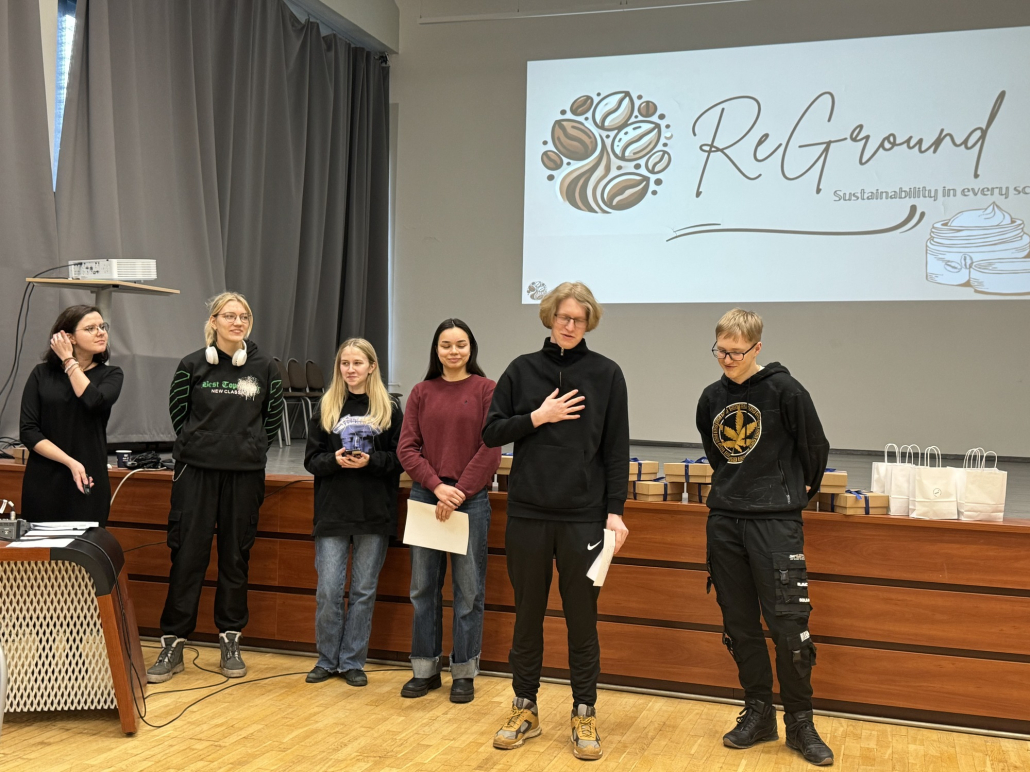
- Reimagining coffee waste: Creating sustainable products or processes from the coffee grounds generated daily by cafes and restaurants.
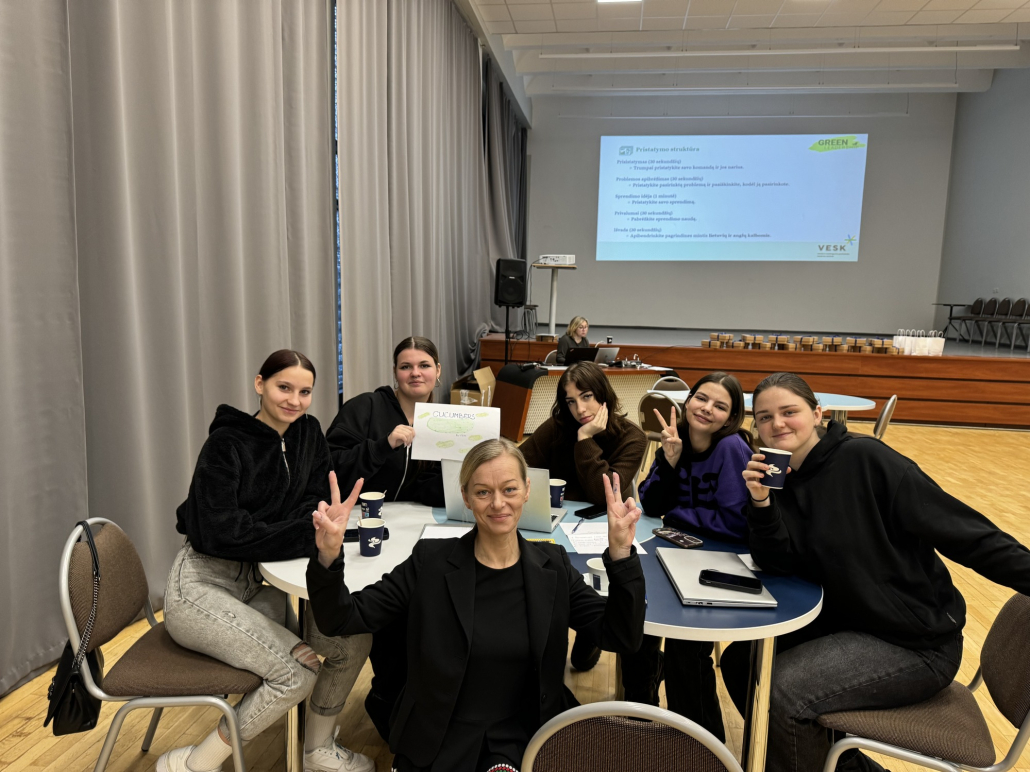
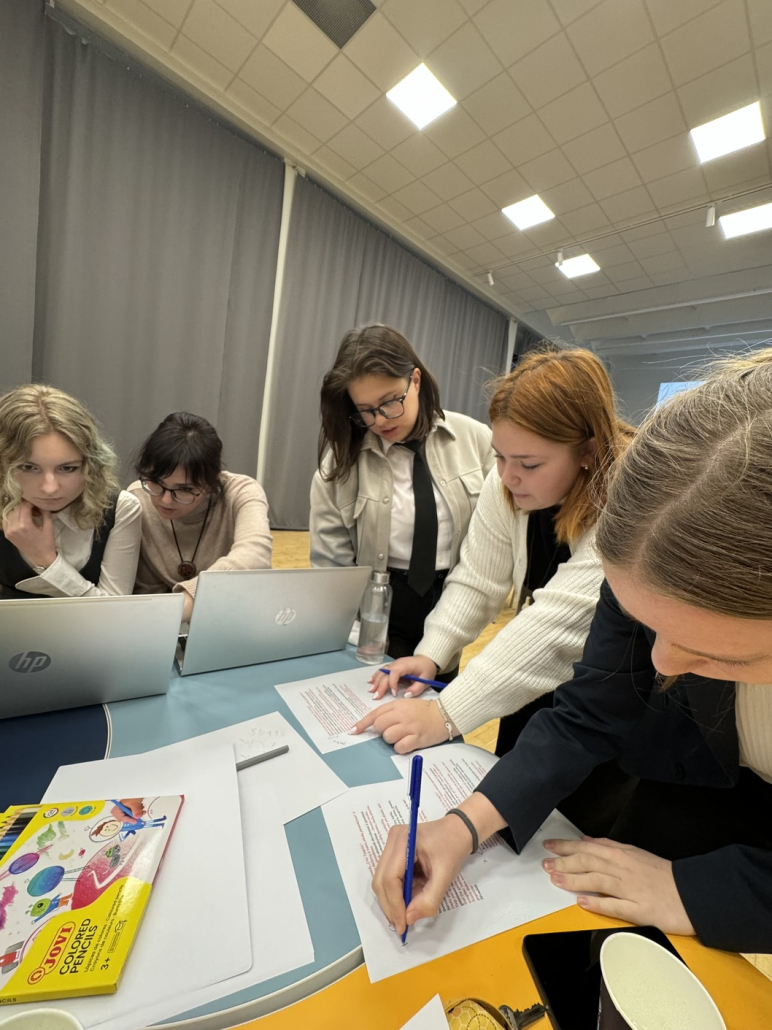
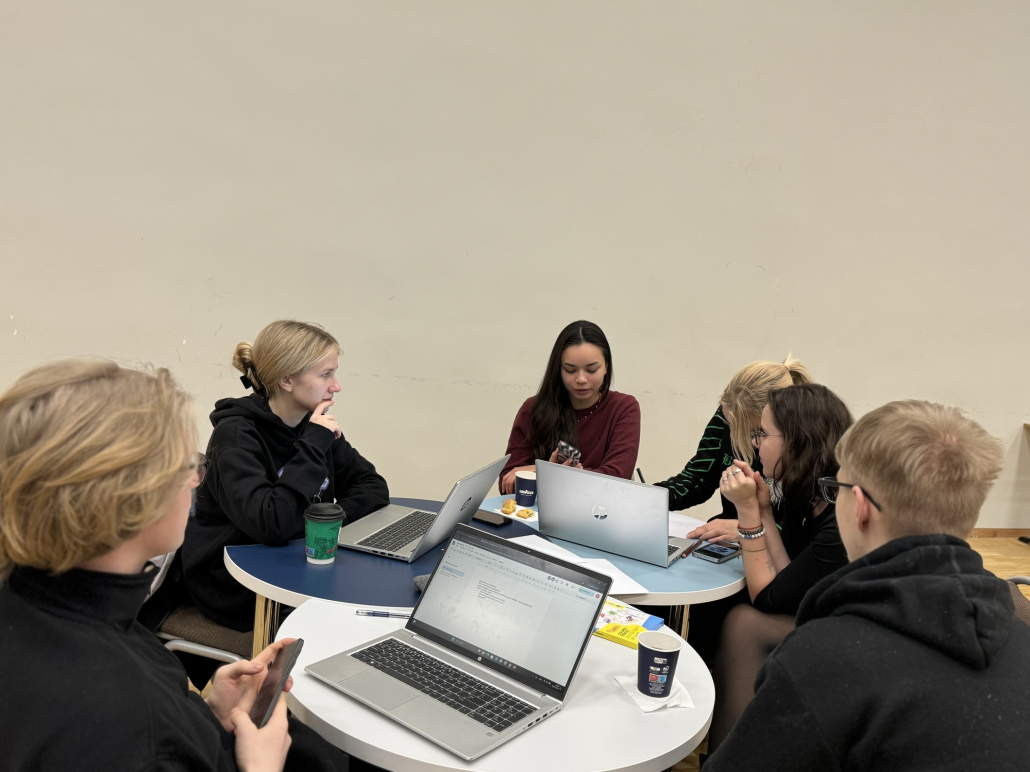
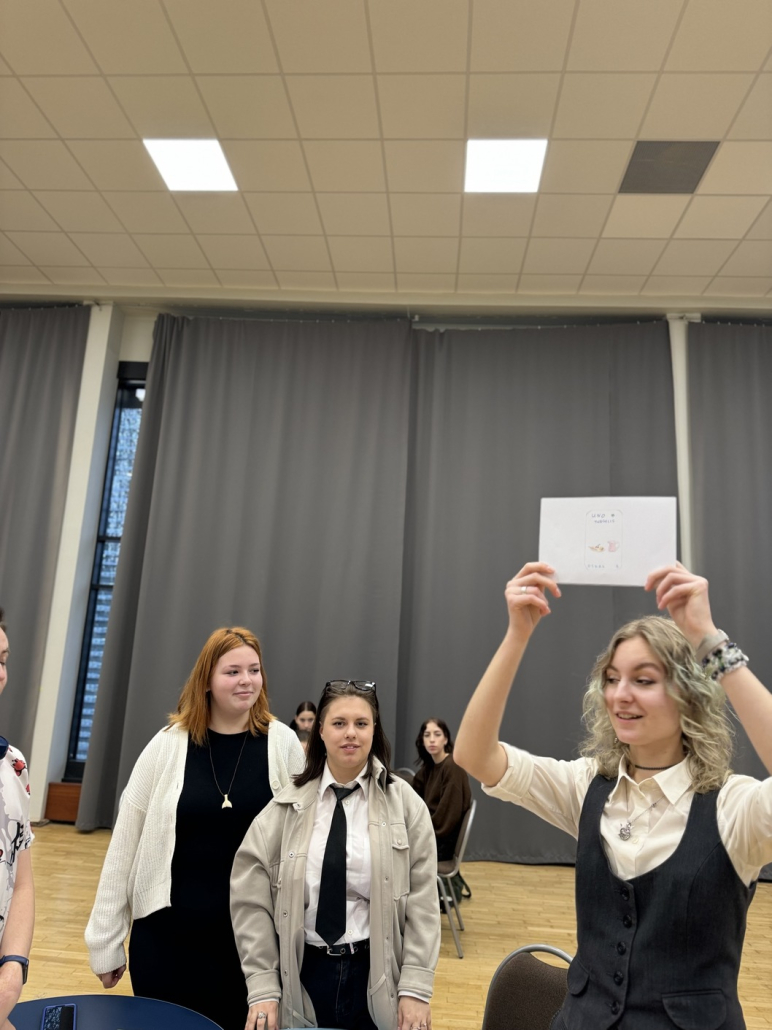
The hackathon began with an inspiring keynote speech, setting the tone for a day of creativity and teamwork. Guided by teacher-mentors, students worked non-stop to refine their ideas and create actionable solutions.
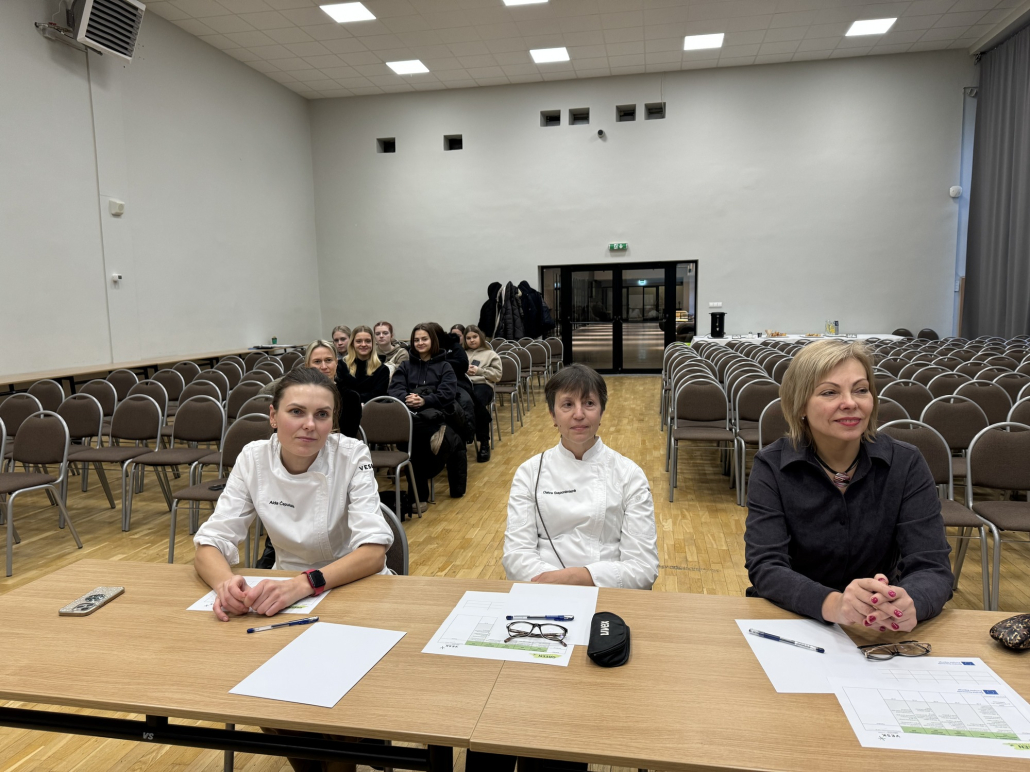
The event concluded with team presentations to the experts. After extensive discussion, the jury selected three winning teams to represent Lithuania at the Baltic Green Leadership Hackathon in Riga, Latvia, on 2-4 April 2025.
The Lithuanian hackathon complements recent events in Latvia and Estonia, demonstrating how the Baltic countries can lead the way in empowering youth to become agents of change in the green transition.
Stay tuned for updates on the Baltic Green Leadership Hackathon in Riga, where the winning teams from Lithuania, Latvia, and Estonia will present their solutions to a broader audience!
Winning Ideas
First-place winners: The first-place winners proposed transforming coffee grounds into eco-friendly briquettes, contributing to the circular economy by turning waste into valuable resources. This idea harmonizes sustainability, ecology, and energy needs.
Second-place team: The second-place team focused on reducing the disposal of used coffee grounds, minimizing waste while creating products such as skin-nourishing scrubs and scent bags. Their initiative also engaged seniors in meaningful activities and promoted volunteerism, fostering a sense of community and environmental awareness.
Third-place team: The third-place team introduced a sustainable approach to utilizing vegetable peels, husks, and seeds in animal farming. Their solution emphasized creating high-quality feed, compost, and energy supplements from agricultural byproducts, ensuring 100% vegetable waste utilization while promoting cost-effective and eco-friendly farming practices.